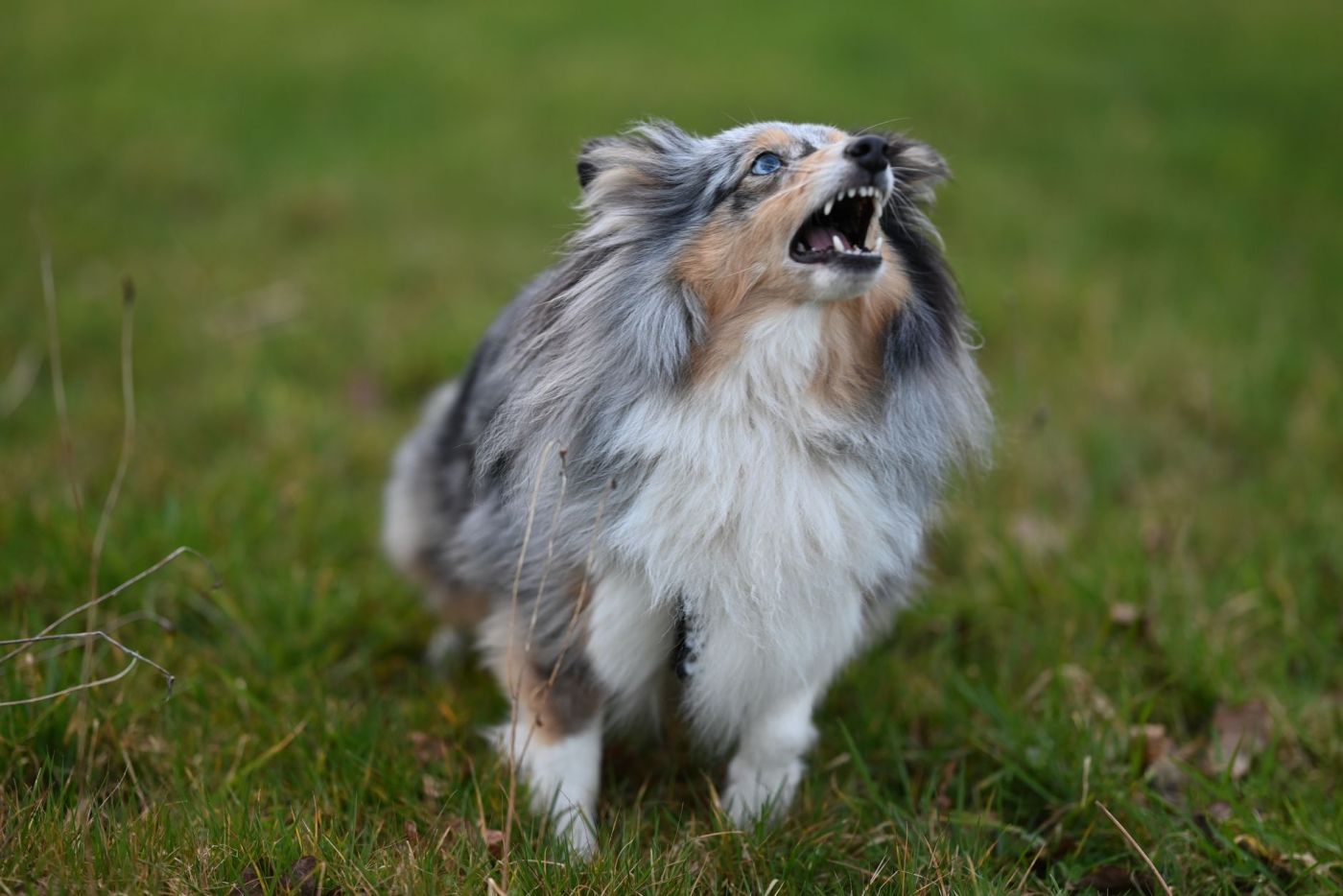
Your dog is talking to you all day — not with words, but with ears, eyes, tail, and posture. Every ear flick, yawn, and tail wag is part of a conversation, and learning to read it can prevent bites, ease stress, and clear up a lot of misunderstandings between you and your dog.
You do not need to be a dog behavior expert to get good at this. You just need to slow down and watch the whole dog, in context, instead of grabbing onto one signal and guessing what it means.
Look at the Whole Dog, Not One Signal
A wagging tail is the classic example. Many people assume a wagging tail always means a happy dog, but a high, stiff, fast wag can mean excitement, frustration, or even a warning. The tail only makes sense alongside the rest of the body.
So read ears, eyes, mouth, posture, and tail together. Are the ears relaxed or pinned flat? Are the eyes soft, or wide with a lot of white showing? Is the mouth open and loose, or closed tight with lips pulled back? Is the body loose and wiggly, or stiff and leaning forward? Context changes everything.
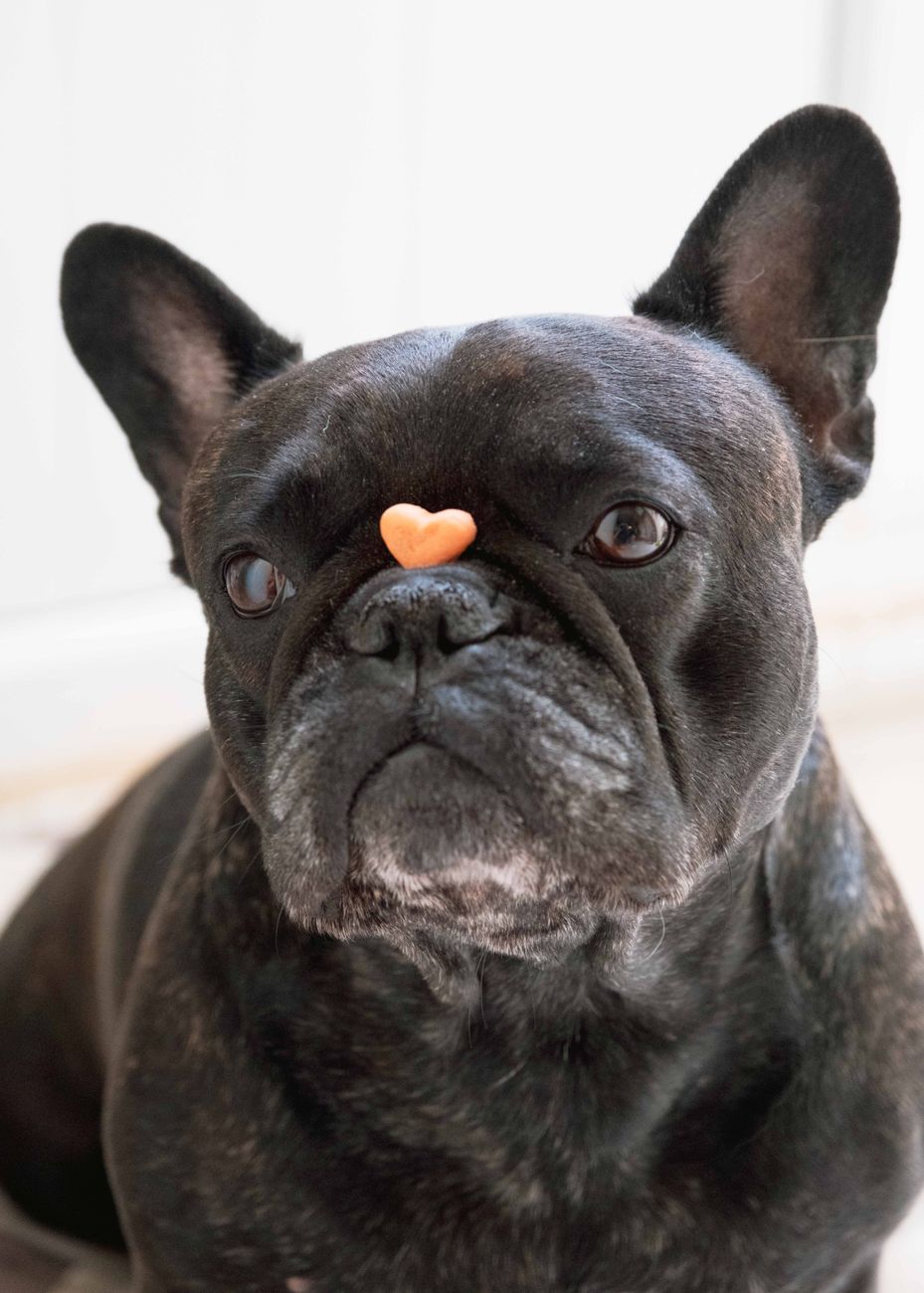
Happy and Relaxed
A happy, relaxed dog is easy to spot once you know the signs. The eyes are soft, with a gentle, squinty look. The body is loose and wiggly. The mouth is open, the tongue may be out, and the ears sit in their natural position.
The tail hangs in a wide, loose sweep, often at a middle height, moving in big, relaxed arcs rather than fast, tight wags.
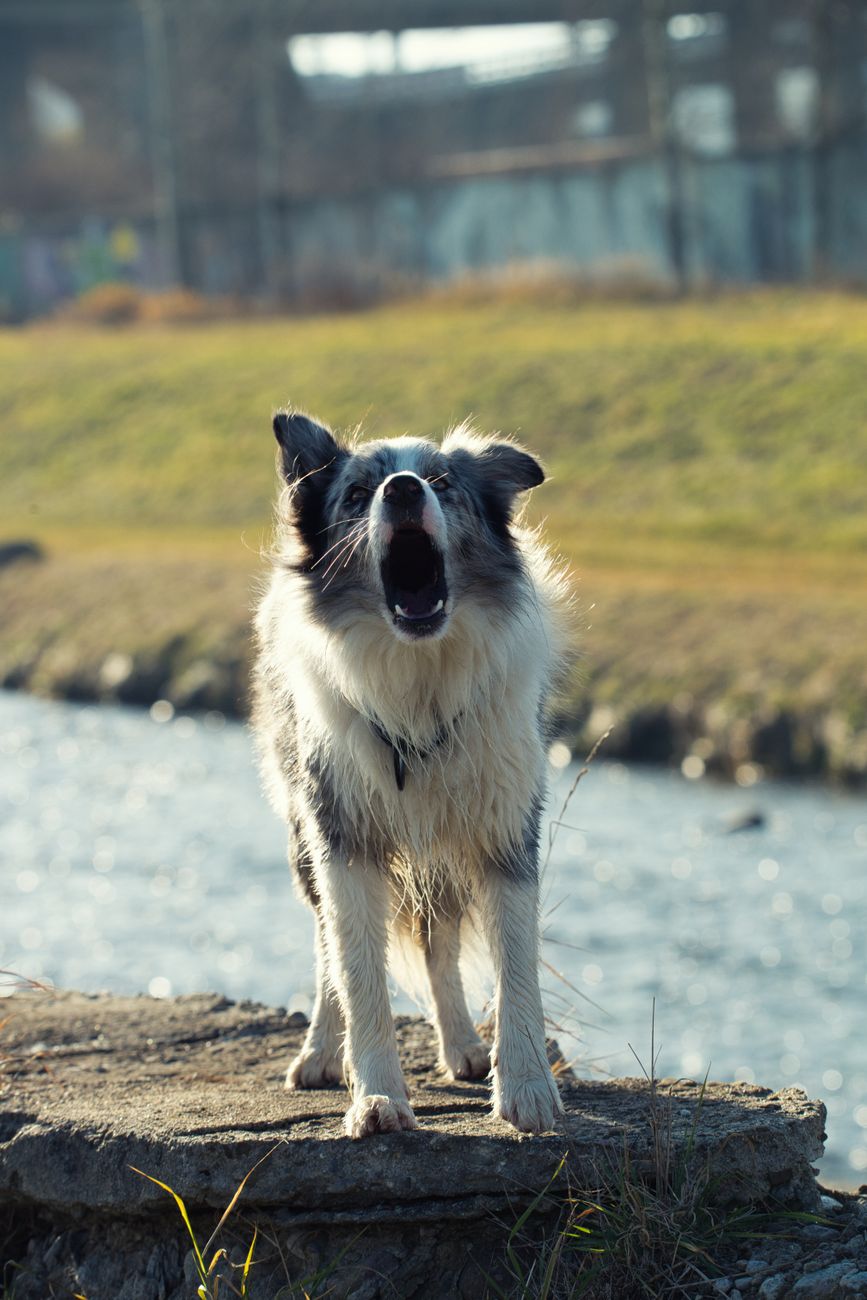
Stressed, Scared, or Anxious
Stress looks very different. Watch for “whale eye” — the whites of the eyes showing in a half-moon shape while your dog turns their head away. You may also see yawning and lip licking when your dog is not tired or hungry, a tucked tail, ears pinned back, and a body held low to the ground.
Some dogs freeze completely, while others hide, pace, or try to leave the room. None of this means your dog is being stubborn. It means they are uncomfortable and asking for the pressure to stop.
Overexcited or Overstimulated
Overexcitement can look like happiness, but the body tells a different story. The body goes stiff, the stare hardens, the tail moves fast and high, and your dog may jump up, mouth hands, or grab at clothes. A dog in this state cannot think clearly.
That is when a calm plan helps. Work on teaching a gentle mouth with our guide to puppy biting, and give your dog a job to do instead, like mat training, so they have a calm place to settle when life gets exciting. Short, calm practice beats long, frantic sessions every time.
5 Calming Signals to Watch For
Dogs use calming signals to tell other dogs — and us — that they are uneasy and want things to slow down. If you see one, take it as a polite request for space.
- Turning the head away — “I need a moment; please do not push closer.”
- Yawning — a big, slow yawn when your dog is not sleepy.
- Lip licking — a quick tongue flick over the nose, with no food around.
- Slow blinking — soft, slow blinks that say “I am not a threat.”
- Sniffing the ground — suddenly very interested in the grass when things get tense.
What to Do When You Spot Stress
First, give your dog space. Step back, increase the distance, and let them move away if they want to. Do not force greetings with people or other dogs — a dog who can choose to approach is a dog who can relax.
Remove the trigger if you can, whether that means crossing the street, ending a visit, or closing a door. Stay calm yourself, because your tension travels straight down the leash. Then practice at a distance where your dog can still notice the trigger without panicking, rewarding calm behavior with positive reinforcement.
Frequently Asked Questions
Is a wagging tail always friendly? No. A loose, wide wag usually means a relaxed dog, but a high, stiff, fast wag can mean excitement, frustration, or a warning. Always read the tail together with the ears, eyes, mouth, and posture.
What does it mean when my dog yawns a lot? If your dog is not tired, frequent yawning is often a stress signal. It is one of the calming signals above, and it usually means your dog feels uneasy and would like some space.
Can I teach my kids to read our dog? Yes, and it is one of the best safety lessons you can give them. Teach them the happy signs and the stress signs, and two simple rules: let the dog come to you, and leave the dog alone when they walk away, yawn, or lick their lips.
Free puppy checklist: https://rockynus.systeme.io/04b9540e
More practical training kits in the RockynusPrints shop on Etsy: https://rockynusprints.etsy.com
For separation anxiety, the book “Calm When You’re Gone” by Rockynus on Amazon (paperback): https://www.amazon.com/dp/B0HR9W6L2S


Leave a Reply