
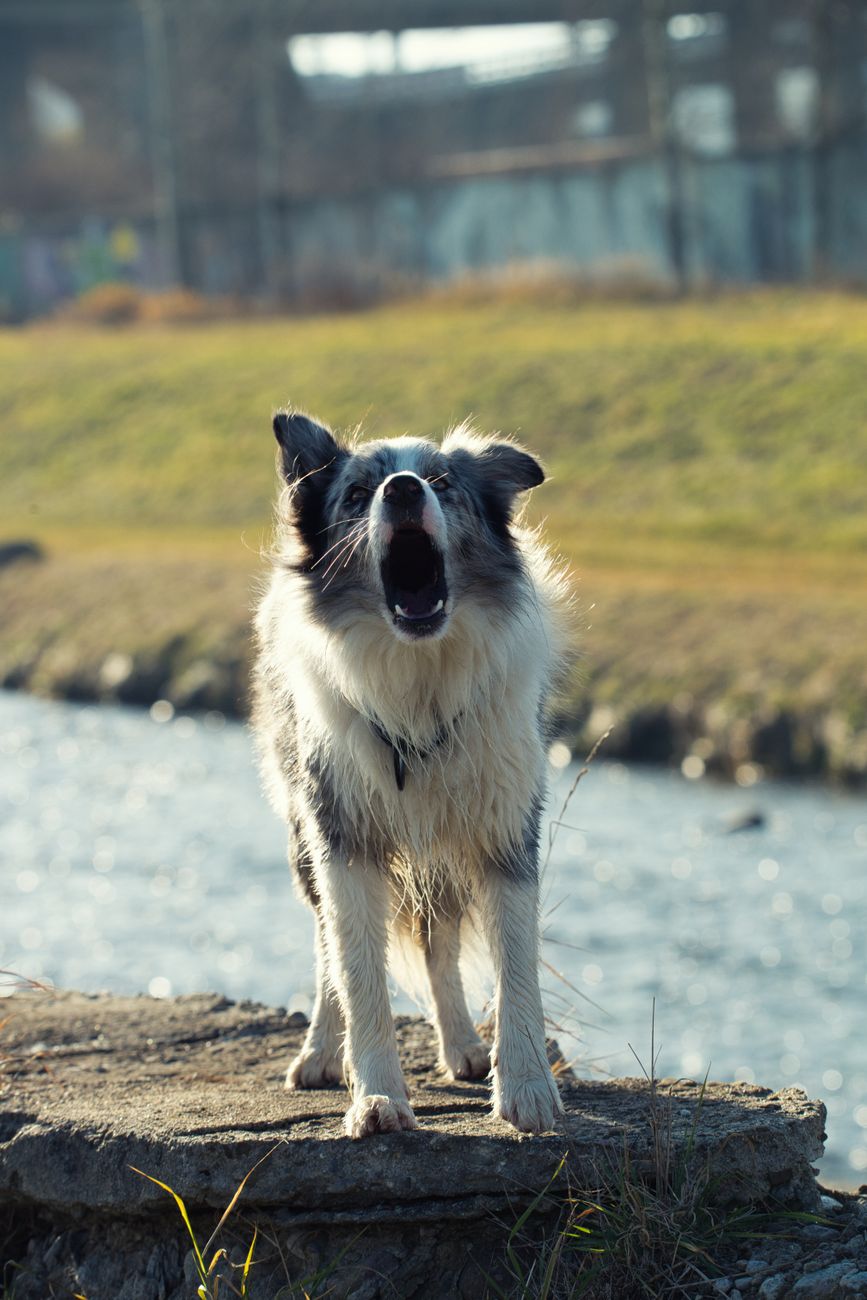
Barking is your dog talking. The doorbell rings, a squirrel crosses the yard, a stranger walks past — and your dog has something to say about it. A little barking is normal. But when it goes on and on, it wears everyone down, including your dog.
The fix is not yelling. When you shout “quiet!” over the barking, your dog just hears you barking along. The real fix is quieter than that: figure out why your dog is barking, teach a “Quiet” cue, and manage the trigger while the training sinks in.
First, Figure Out Why Your Dog Is Barking
Barking is not one behavior — it is several, and each one needs a slightly different answer. Listen for a day and sort your dog’s barking into a bucket:
- Alert barking — the doorbell, people passing the window, a knock at the door.
- Attention barking — barking at you, then staring, then barking again.
- Boredom barking — long stretches of barking when nothing is happening.
- Anxiety barking — barking that starts when you leave and stops when you come home.
- Excitement barking — greeting visitors, mealtime, the leash coming out.
You cannot fix a trigger you have not named. If the barking mostly happens when you leave the house, that is a different problem from barking at the mail carrier — and it needs a different plan.

Teach a “Quiet” Cue in 4 Steps
This is a positive reinforcement exercise: we reward the silence, not punish the noise. Short sessions, five minutes at a time, once or twice a day.
- Wait for a pause. The next time your dog barks, wait. Dogs pause between barks to breathe. The moment there is a gap, say “Yes!” and give a small, tasty treat.
- Add the word. After a few repetitions, say “Quiet” right as the pause happens, then treat. Your dog starts to connect the word with the silence.
- Build the silence. Ask for two seconds of quiet before the treat, then five, then ten. If your dog barks again, simply wait for the next pause and try again — no scolding.
- Practice with the real trigger. Once “Quiet” works in a calm room, try it at low intensity: a friend walking past outside, a soft knock. Reward generously and keep sessions short.
Most dogs start to get it within a week or two of short daily practice. The goal is not a dog that never barks — it is a dog that barks once, hears “Quiet,” and settles.
Manage the Trigger While You Train
Training takes time, and your dog will keep practicing the old habit in the meantime. A little grounding in dog training basics goes a long way here.
- Block the view. Frosted window film or a baby gate keeps a window-barker from rehearsing all day.
- Add background sound. A radio or white noise machine softens doorbells and street noise.
- Tire the brain first. A sniffy walk or a frozen stuffed Kong before the busy hour takes the edge off alert barking.
- Answer the door calmly. Excited greetings from you teach your dog that the doorbell is a big event.
What Not to Do
- Do not yell. To your dog, shouting sounds like you are barking too — and it adds excitement to the moment.
- Do not reach for a punishment collar as a first step. It can suppress the barking without teaching your dog anything, and it can make an anxious dog more anxious.
- Do not reward barking with attention. Even “Shh!” or pushing your dog away is attention, and attention is exactly what an attention-barker wants.
When Barking Means Something More
If the barking happens mostly when you leave — along with pacing, drooling, or scratching at the door — your dog may be struggling with being alone. That is separation anxiety, and yelling or punishment will only make it worse. Start by reading the signs of separation anxiety, then work on short, gradual departures. Our book, Calm When You’re Gone, walks you through the full gradual-departure plan step by step.
Quick Answers
- How long does it take? Most owners see real progress in two to three weeks of short daily practice.
- Will my dog ever bark again? Yes — and that is fine. The goal is shorter, calmer barking, not silence.
- My dog barks at everything. Where do I start? Pick the easiest trigger first, get a win there, then move to the harder one.
Want a calmer puppy from day one? Grab our free puppy checklist here: https://rockynus.systeme.io/04b9540e
Looking for step-by-step help? Find the Stop Barking 7-Day Plan and our other dog-training printables in the RockynusPrints shop on Etsy: https://rockynusprints.etsy.com
And if your dog struggles when left alone, Calm When You’re Gone by Rockynus walks you through the full plan: https://www.amazon.com/dp/B0HR9W6L2S


Leave a Reply