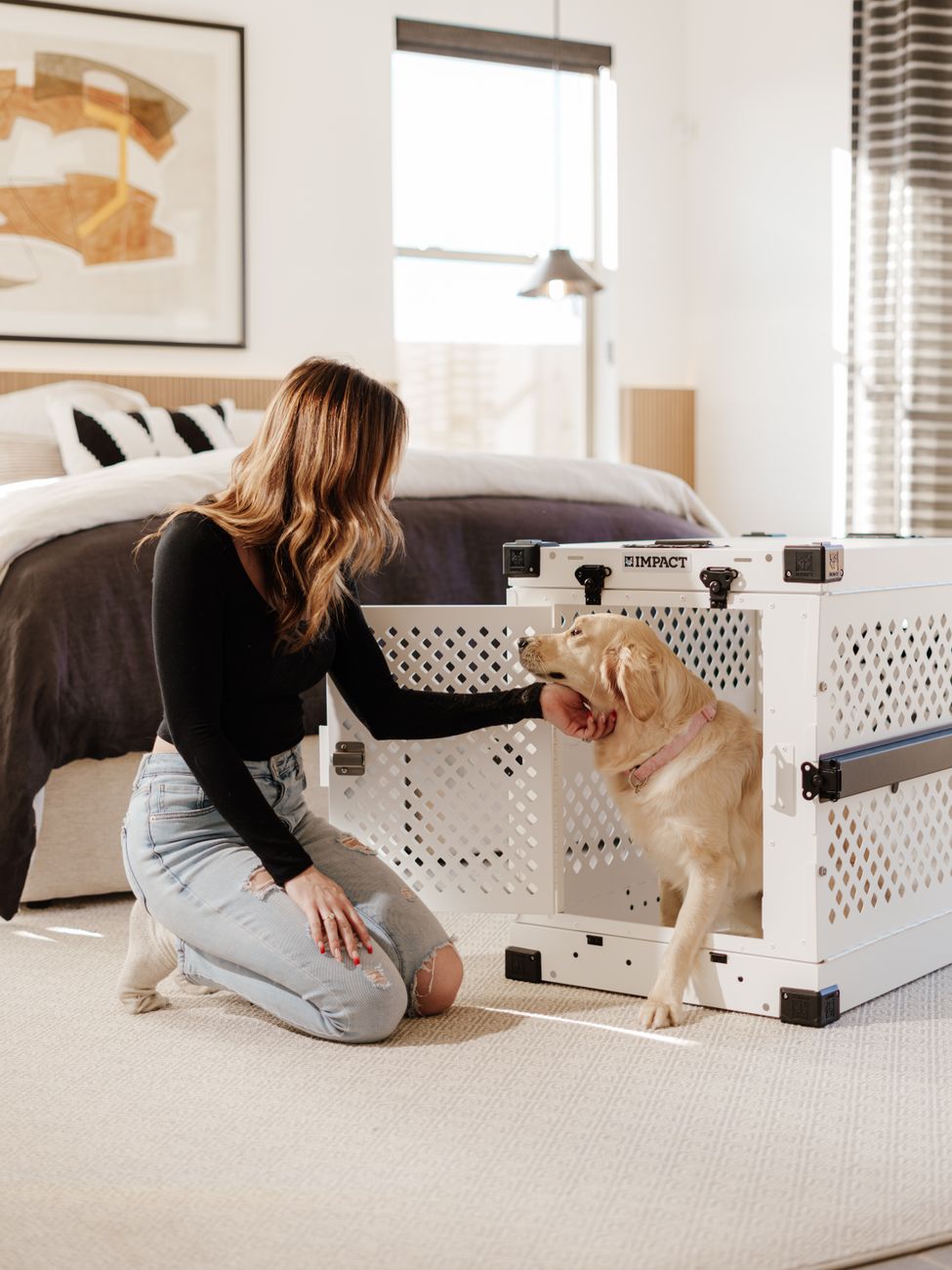
Bringing a new puppy home is pure joy — and a little bit of chaos. Between the chewed shoes and the 2 a.m. potty trips, you may be wondering if there is a calmer place for your puppy (and yourself) to land. There is: crate training.
A crate is not a cage, and it is never a punishment. Done the right way, it becomes your puppy’s own cozy den — a safe, quiet spot to rest and recharge. Here is how to introduce it gently, so your puppy learns to love it.
Why Crate Training Works
Dogs are den animals by nature: a den is a small, safe place to sleep — and your puppy still carries that instinct. A crate taps right into it.
A crate also makes everyday life easier: it keeps your puppy safe when you cannot watch them, and it helps with potty training, because most puppies avoid soiling their sleeping spot.
Most importantly, a crate gives your puppy a healthy way to learn alone time. A puppy who can relax in their den is building confidence — one quiet nap at a time. Find more ideas on our Training page.
Picking the Right Crate
Start with size: your puppy should be able to stand up, turn around, and stretch out comfortably — but not have so much room that one end becomes a bathroom. A divider panel keeps the space snug while your puppy grows.
- Wire crates: great airflow and visibility, and most come with a divider panel.
- Plastic crates: cozier and more den-like, and handy for travel.
- Location matters: set the crate where your family spends time, so your puppy never feels banished.
Make it inviting: a soft blanket or crate mat, a safe chew toy, and a few treats tucked inside.
Crate Training in 5 Gentle Steps
Go slowly: the goal is a puppy who walks into the crate happily.
- Let your puppy explore. Set it up with the door open and let your puppy sniff around. Toss a few treats just inside the doorway.
- Make it rewarding. Feed meals inside the crate and praise your puppy when they settle there — positive reinforcement in action: good things happen in the crate, so the crate becomes a good place.
- Close the door for a few seconds. While your puppy is chewing a treat, gently close the door, then open it again before they fuss. Repeat, adding a few seconds each time.
- Build up alone time. Step out of the room for a minute, then two, then five, always coming back before your puppy gets upset. Keep hellos and goodbyes low-key.
- Keep a routine. Crate time works best on a schedule — after play, meals, and potty breaks. A predictable puppy routine helps your puppy know when playtime comes next.
How Long Is Too Long?
A good rule of thumb: one hour per month of age, plus one — so a three-month-old manages about four hours at most. Overnight, most puppies sleep longer once settled.
- 8–10 weeks: 30–60 minutes at a time during the day.
- 3–4 months: up to 2–3 hours.
- 5–6 months: up to 4 hours.
Never leave a puppy crated all day while you are at work — that is too long for any young dog. Arrange a midday potty break if you are away for long stretches.
Common Crate Training Mistakes to Avoid
It is easy to make the crate feel like a punishment by accident:
- Using the crate for time-outs. The crate should never be where your puppy goes when they are “bad.”
- Rushing it. An hour behind a closed door on day one is a recipe for panic.
- Letting your puppy out the second they cry. Wait for a quiet pause, even a brief one, so you reward calm — not noise.
- Skipping potty breaks. A puppy who has to go will never learn to love their den.
If things go sideways, just go back a step. Slow is fast with puppies.
Quick Answers
Will my puppy cry in the crate at first?
A little fussing is normal the first few nights. Keep the crate near your bed, stay calm, and wait for a quiet moment before letting them out.
Should I put food and water in the crate?
Meals in the crate are a great idea — they build happy associations. A small water bowl is fine for longer stretches, but skip it at night for young puppies.
Can I crate train an older dog or a rescue dog?
Yes! Older and rescue dogs can learn to love a crate too — just go slowly, keep sessions short and positive, and let them walk in on their own.
Ready to Set Up Your Puppy for Success?
Crate training is one of the kindest gifts you can give your puppy: a safe little den of their own. Start today — open the door, toss in a treat, and let your puppy discover it.
- Grab our free puppy checklist to get your first weeks organized.
- Want a day-by-day plan? Check out the Premium 30-Day Puppy Academy on Etsy.
- And if alone time is your puppy’s biggest struggle, our book Calm When You’re Gone by Rockynus is available in paperback on Amazon.


Leave a Reply