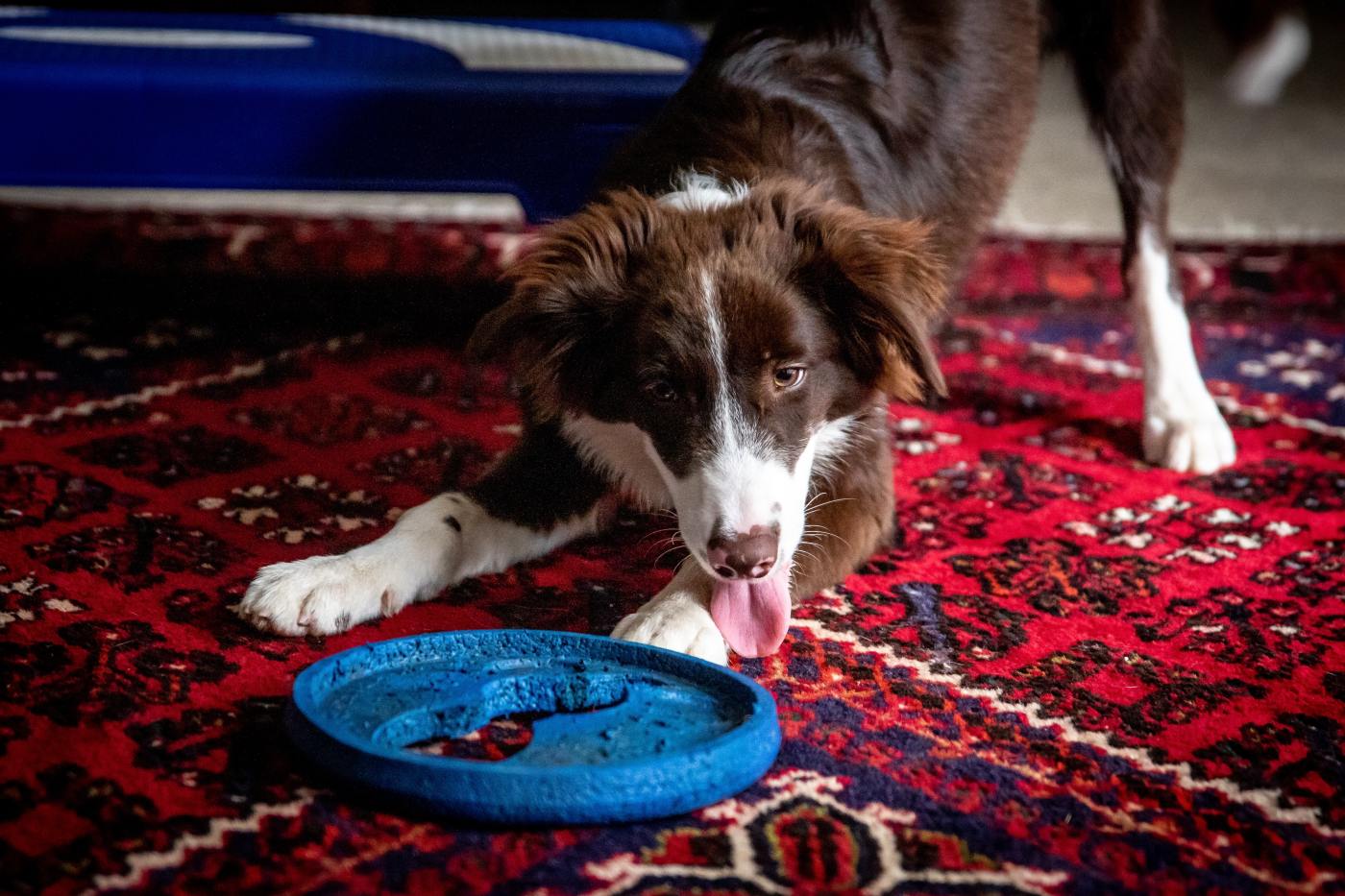
If your puppy turns into a tiny land shark every evening, you are not alone. The jumping, biting, barking, zoomies, sock stealing, and couch launching usually are not “bad behavior.” Most of the time, your puppy is overtired, overstimulated, and has too much freedom at the exact wrong time.
This is what many owners call the puppy witching hour. It often shows up in the evening, right when the house gets busy, dinner is happening, kids are moving around, and everyone is ready to relax.
The good news: you do not need a complicated training plan tonight. You need a simple reset routine your puppy can repeat.
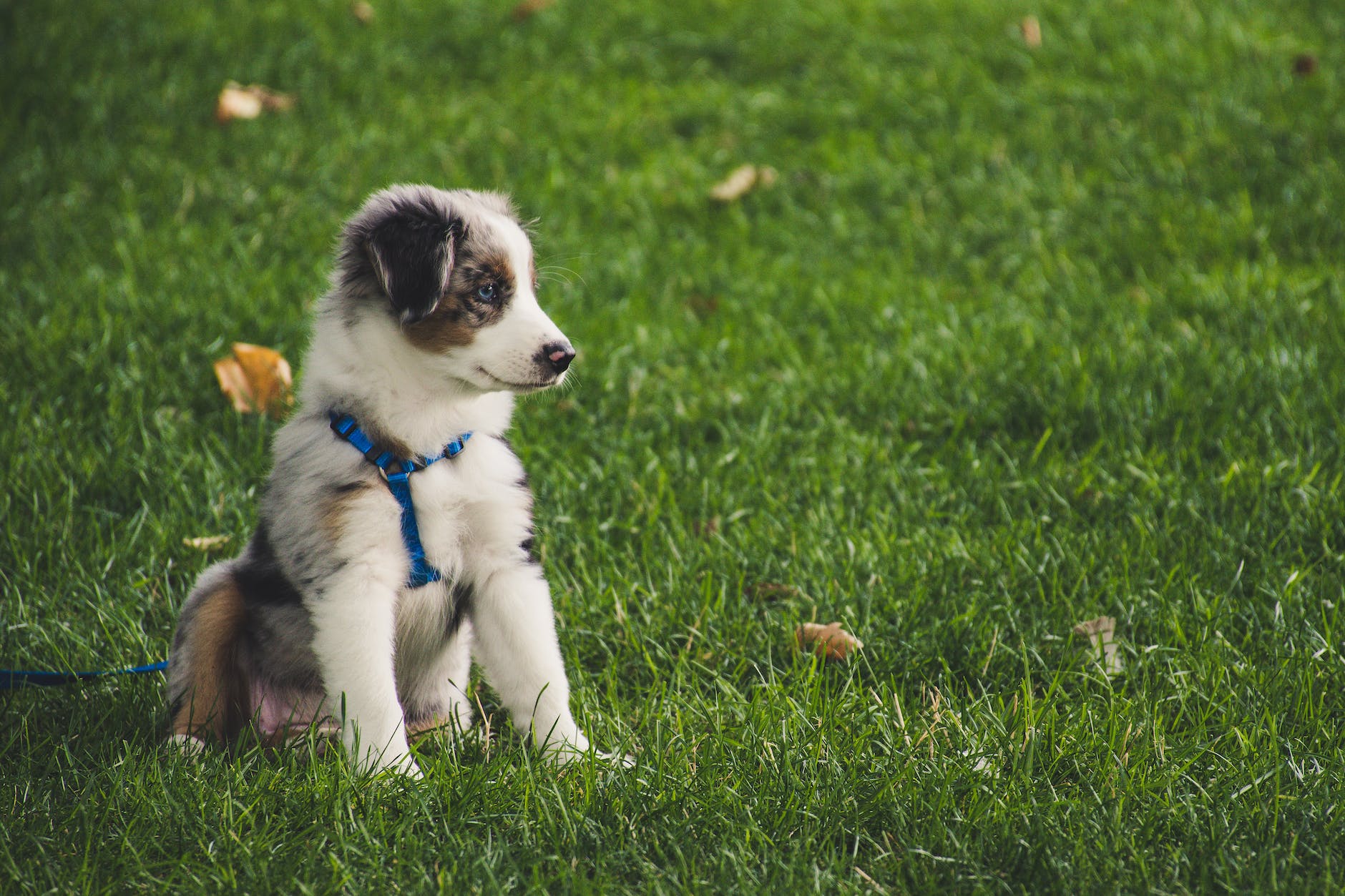
What Is the Puppy Witching Hour?
The puppy witching hour is the time of day when your puppy suddenly seems unable to settle. One minute they are cute and sleepy. The next minute they are biting your hands, grabbing clothes, racing through the house, barking at nothing, or attacking the leash.
For many puppies, this happens in the late afternoon or evening. It can feel random, but there is usually a pattern behind it.
Common signs your puppy is overstimulated
- Biting harder than usual
- Zoomies around the room
- Jumping on people or furniture
- Stealing socks, shoes, or towels
- Barking for attention
- Ignoring cues they normally know
- Refusing to settle even after play
If this sounds familiar, the answer is not always “more exercise.” Sometimes more chaos creates more chaos.
Why Puppies Get Wild at Night
Puppies have small bodies, developing brains, and limited self-control. They can go from tired to frantic fast. Evening chaos usually comes from a mix of three things: too much energy, not enough rest, and no clear structure.
1. Your puppy may be overtired
Overtired puppies often look hyper, not sleepy. Instead of lying down, they bite, run, bark, and fight rest. This is similar to a toddler melting down before bedtime. The body needs sleep, but the brain is too wound up to choose calm behavior.
2. Your puppy may be overstimulated
Evening is full of movement: people coming home, dinner smells, TV sounds, kids playing, doors opening, and everyone changing routines. Your puppy takes all of that in and may not know how to downshift.
3. Your puppy may have too much freedom
When a tired puppy has full access to the house, they will usually find their own activity. That activity might be chewing the rug, chasing the cat, grabbing laundry, or biting your ankles. Freedom without structure is where many evening problems start.
The Mistake: Trying to Tire Them Out More
It makes sense to think, “My puppy is wild, so I need to play harder.” But rough play, chasing, wrestling, and high-speed fetch can push an already overstimulated puppy even higher.
That does not mean play is bad. Puppies need movement and enrichment. But when your puppy is already biting and zooming, the goal should shift from more excitement to controlled decompression.
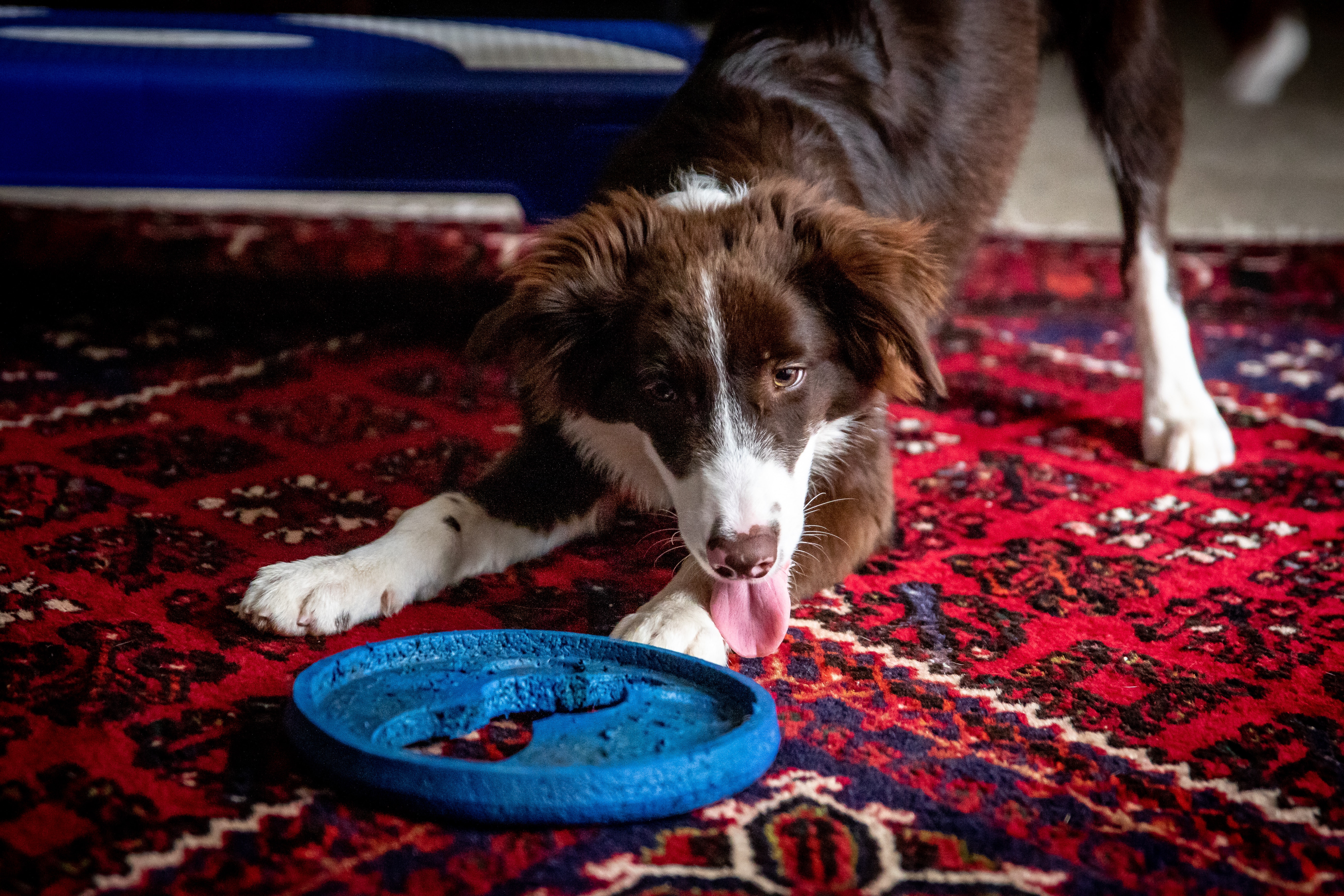
The 3-Step Puppy Night Reset Routine
Use this simple routine when your puppy starts getting wild in the evening. It gives your puppy a predictable path from chaos to calm.
Step 1: Potty reset first
Before you correct biting or barking, take your puppy outside for a quick potty break. Many puppies get restless when they need to go. A potty reset also prevents accidents before calm time.
Keep it boring and clear. Go outside, give them a chance to potty, praise calmly, then come back in. This is not a wild play session.
Step 2: Add five minutes of sniffing
Sniffing helps many dogs decompress. Instead of rough play, try a short sniff walk, scatter a few pieces of kibble in the grass, or use a simple food puzzle.
The goal is not to exhaust your puppy. The goal is to give their brain something calm and productive to do.
Step 3: Finish with a calm place break
After potty and sniffing, guide your puppy to a crate, pen, bed, or gated area with something safe to chew. This is where many owners go wrong: they do the right calming activity, then immediately give the puppy full freedom again.
Freedom should come after calm, not before it.
A Simple Evening Puppy Schedule
Here is a sample structure you can test tonight:
- 6:30 PM: Dinner
- 6:45 PM: Potty break
- 7:00 PM: Short sniff walk or food scatter
- 7:10 PM: Calm crate, pen, or bed break
- 7:45 PM: Quiet supervised time if your puppy is settled
- Before bed: Final potty break
Your exact times may change, but the order matters: potty, decompress, settle, then freedom.
What If Your Puppy Still Bites?
If your puppy still bites after the reset, do not turn it into a wrestling match. Calmly remove access to your hands, clothes, or ankles and redirect to an appropriate chew or rest area.
Also check the basics:
- Did your puppy nap enough today?
- Did they get a potty break after food, water, play, and waking up?
- Are they getting too much freedom too early?
- Are you accidentally rewarding barking or biting with attention?
- Do they have a safe chew option during calm time?
If the biting is intense, escalating, or paired with fear or aggression, talk with a qualified trainer or your veterinarian for support.
Quick Win: Try the 7-Night Pattern Test
For the next seven nights, write down when your puppy gets wild and what happened right before it. Track food, water, play, naps, potty breaks, visitors, and free-roam time.
You will probably see the pattern fast. Once you see the pattern, you can prevent the chaos instead of reacting to it every night.
FAQ: Puppy Witching Hour
What age do puppies grow out of the witching hour?
Many puppies improve as they mature, but waiting it out is not the best plan. A predictable evening routine helps your puppy learn how to settle sooner.
Should I crate my puppy when they get wild?
A crate or pen can help if it is used calmly and your puppy has been introduced to it positively. Do not use it as punishment. Think of it as a quiet place to reset.
Is puppy biting at night normal?
Some evening biting is common, especially with young puppies. But it should improve with structure, enough rest, appropriate chew outlets, and consistent redirection.
Does my puppy need more exercise?
Maybe, but not always. If your puppy is already frantic, more high-energy play can make things worse. Try calm enrichment like sniffing, food puzzles, and structured rest.
Final Takeaway
Your puppy is not trying to ruin your evening. They are learning how to live in your home, manage excitement, and settle their body. When the night chaos hits, do not just chase the behavior. Change the routine.
Tonight, try this: potty reset, five minutes of sniffing, then a calm place break. Repeat it for seven nights and watch for the pattern.
Want help building a calmer puppy routine? Follow RockyNus for practical dog training tips and grab the puppy routine resources linked from our site.
Helpful next reads: healthy puppy routines, positive reinforcement training, and interactive toys and puzzles.


Leave a comment