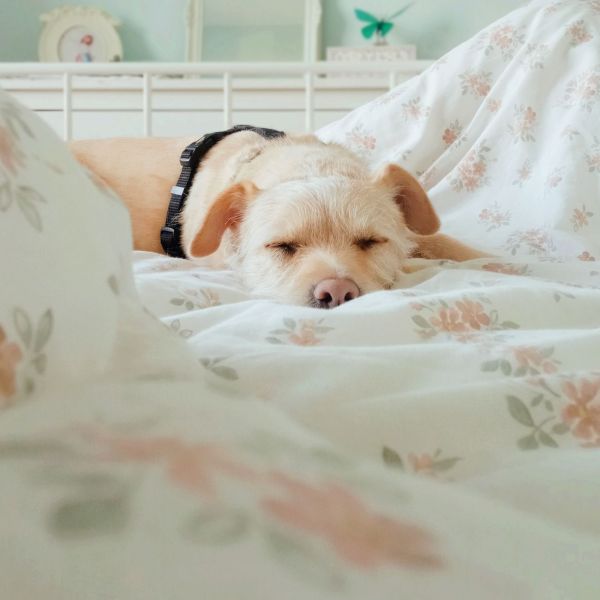
Picture this: the doorbell rings, and your dog charges the door, barking and bouncing. A “place” cue changes all of that. Mat training teaches your dog to go to a mat or bed and settle there calmly until you release them. Here is how to teach it in five simple steps.
What “Place” Means (and Why It Works)
“Place” simply means: go to your mat and stay there until I say you’re done. The mat gives your dog a clear job. They know where to be and what earns a reward. Dogs repeat what pays off, which is the heart of positive reinforcement. When settling earns treats and praise, your dog starts choosing the mat on their own.
What You’ll Need
- A mat or dog bed with clear edges — a bath mat, yoga mat, or raised bed all work.
- Small, soft treats your dog loves, cut into pea-sized pieces.
- Five minutes, two or three times a day — short sessions beat long ones.
The 5-Step Method
Go slowly. If your dog struggles, go back a step — that is progress, not failure.
Step 1 — Pick the Mat and Make It Pay
Put the mat on the floor and let your dog sniff it. Every time they look at it, step on it, or sniff it, drop a treat right on the mat. You are simply teaching your dog the mat is the best place in the room. Soon your dog will head for the mat on their own.
Step 2 — Lure and Reward Settling
Hold a treat just above the mat and lure your dog onto it. The moment all four paws are on the mat, say “Yes!” and reward them on the mat. Once they step on happily, wait for a sit or a down first. Then reward a relaxed body. When you are done, say “Okay!” or “Free!” and toss a treat away from the mat, so they learn the release word ends the exercise.
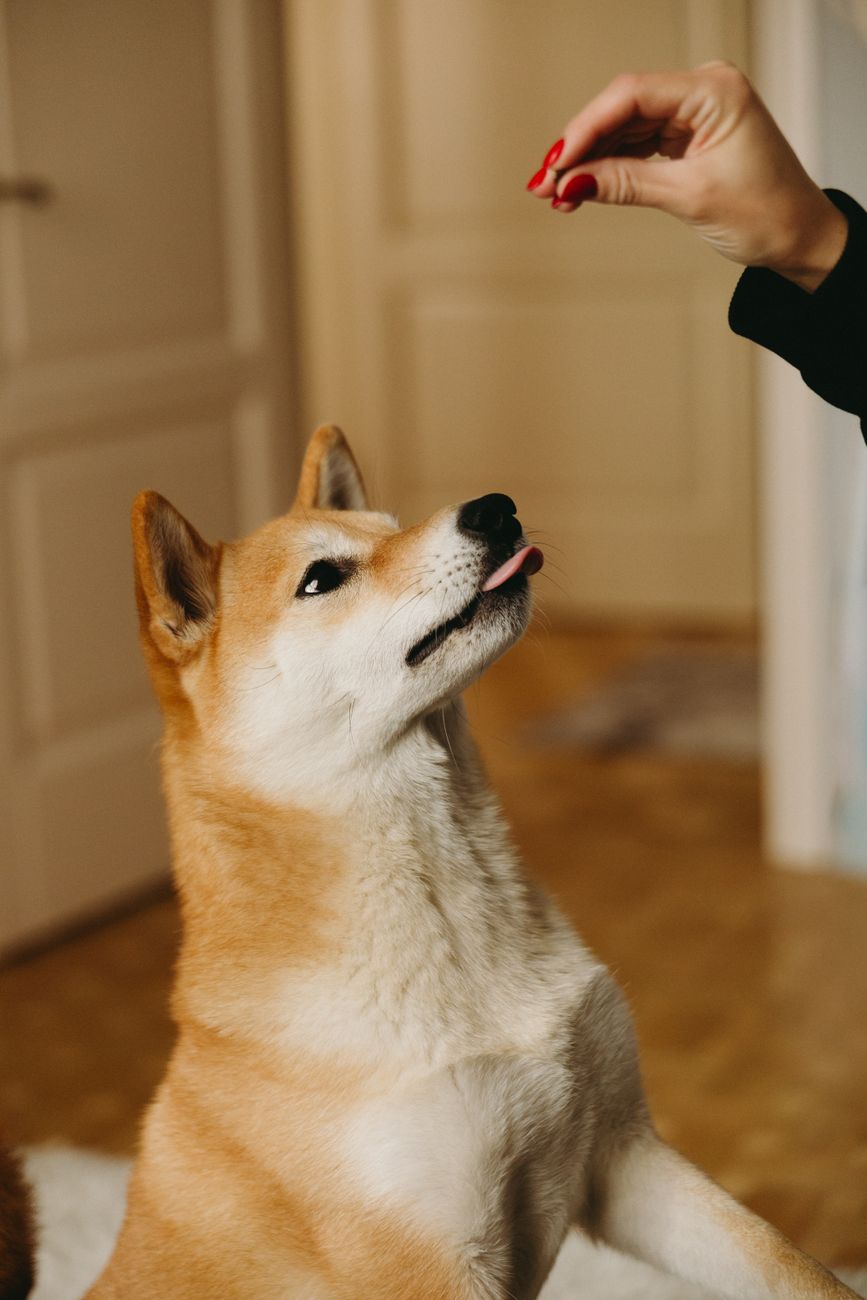
Step 3 — Add the Cue Word “Place”
Once your dog walks to the mat on their own, start saying “Place” just as they step onto it. Say it once, then reward them for settling. Don’t repeat it — saying “place, place, place!” only teaches your dog to wait for the third or fourth try.
Step 4 — Add Distance and Duration
Now build it up slowly, one thing at a time. Take one step back before you send your dog to the mat, then two, then across the room. Separately, stretch the time: three seconds, then five, then ten. Always bring the treat to your dog on the mat, and release them before they leave on their own. If they get up, make it easier and try again.
Step 5 — Practice with Real-Life Distractions
This is where place training really pays off. Start small: ring the doorbell yourself or set the table. Send your dog to their place first. Reward calm settling generously. Over time, your dog will learn that the doorbell is a cue to go to their mat — not to race the door. If it gets too exciting, move further away and build back up.
3 Common Mistakes to Avoid
- Moving too fast. Adding distance, duration, and distractions all at once is the quickest way to confuse your dog.
- Repeating the cue. Saying “place” five times teaches your dog that the first four don’t count. Say it once.
- Using the mat as a punishment. Never send your dog to their place when you are angry, and never use it as a time-out. The mat should always feel like a good deal.
What to Do When Your Dog Keeps Leaving the Mat
First, stay calm. Don’t scold your dog or drag them back — that only makes the mat feel stressful. Quietly guide them back and reward them for settling. Then ask what went wrong — too much distance, too long, too exciting? Make it easier, reward more often, and end on a win. If your dog keeps popping up, stop, play a different game, and try again later. For more ideas, explore our dog training guides.
Frequently Asked Questions
How long does mat training take?
Most dogs learn the basics in one to two weeks of short daily sessions. Holding place with guests around takes longer.
Can I use a dog bed instead of a mat?
Yes! Any spot with clear edges works — a bed, a bath mat, a towel, or a raised cot. Stick with one spot while learning.
What if my dog won’t lie down on the mat?
Reward paws on the mat, then a sit, then a down.
A Calmer Dog Starts with One Mat
A dog who knows their place is a calmer, happier dog — and life gets easier in small moments: quiet dinners, calm greetings, a peaceful house when the doorbell rings. Start today, keep it fun, and watch your dog choose their mat. For more puppy help, see our puppyhood guide.
Want more help with your puppy? Grab our free puppy checklist — a simple step-by-step list for your puppy’s first weeks at home.
Love dog-themed art? Visit the RockynusPrints shop on Etsy for prints and gifts made for dog lovers.
Does your dog struggle when you leave? Check out Calm When You’re Gone by Rockynus on Amazon (paperback).

