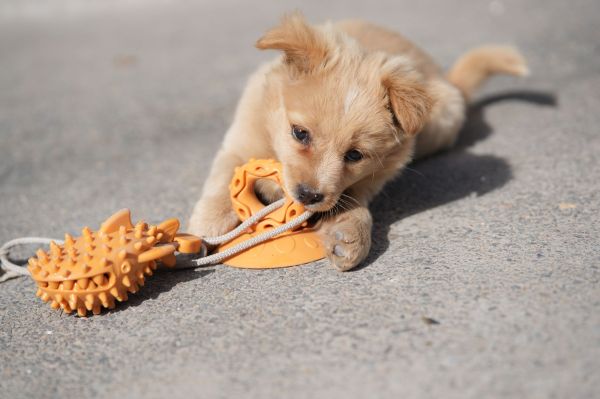
If your puppy’s tiny teeth seem to find your hands, sleeves, and ankles every single day, take a breath — you are not doing anything wrong, and your puppy is not being bad. Biting and mouthing are completely normal puppy behavior. Puppies explore the world with their mouths, they play with their littermates by biting, and teething makes their gums ache. The goal is not to stop your puppy from ever using their mouth. It is to teach them to be gentle — and to chew the right things instead of you.
Why Puppies Bite
Puppies bite for a few simple reasons. First, play: biting is how puppies play with each other, so when your puppy grabs your hand, they are inviting you to play the only way they know how. Second, teething: between about 12 and 28 weeks, adult teeth push through sore gums, and chewing brings relief. Third, exploration: puppies learn about everything — including you — with their mouths. And fourth, being overtired or overstimulated: a puppy who has been awake too long or had too much excitement often gets mouthier, which is why the worst biting usually shows up in the evening.
The 4-Step Gentle Mouth Method
This is the method that actually works, and it takes no scolding at all.
Step 1 — Freeze. The moment teeth touch skin, stop moving. Go still and quiet, and tuck your hands away. Movement is what makes hands fun to chase, so taking the fun away is the first lesson.
Step 2 — Pause. Wait a beat for your puppy to disengage on their own. Even one second of calm is a win worth noticing.
Step 3 — Redirect. Offer a toy or a chew instead — a rope toy, a rubber chew, a frozen carrot. Put the right thing in their mouth before they go looking for the wrong one.
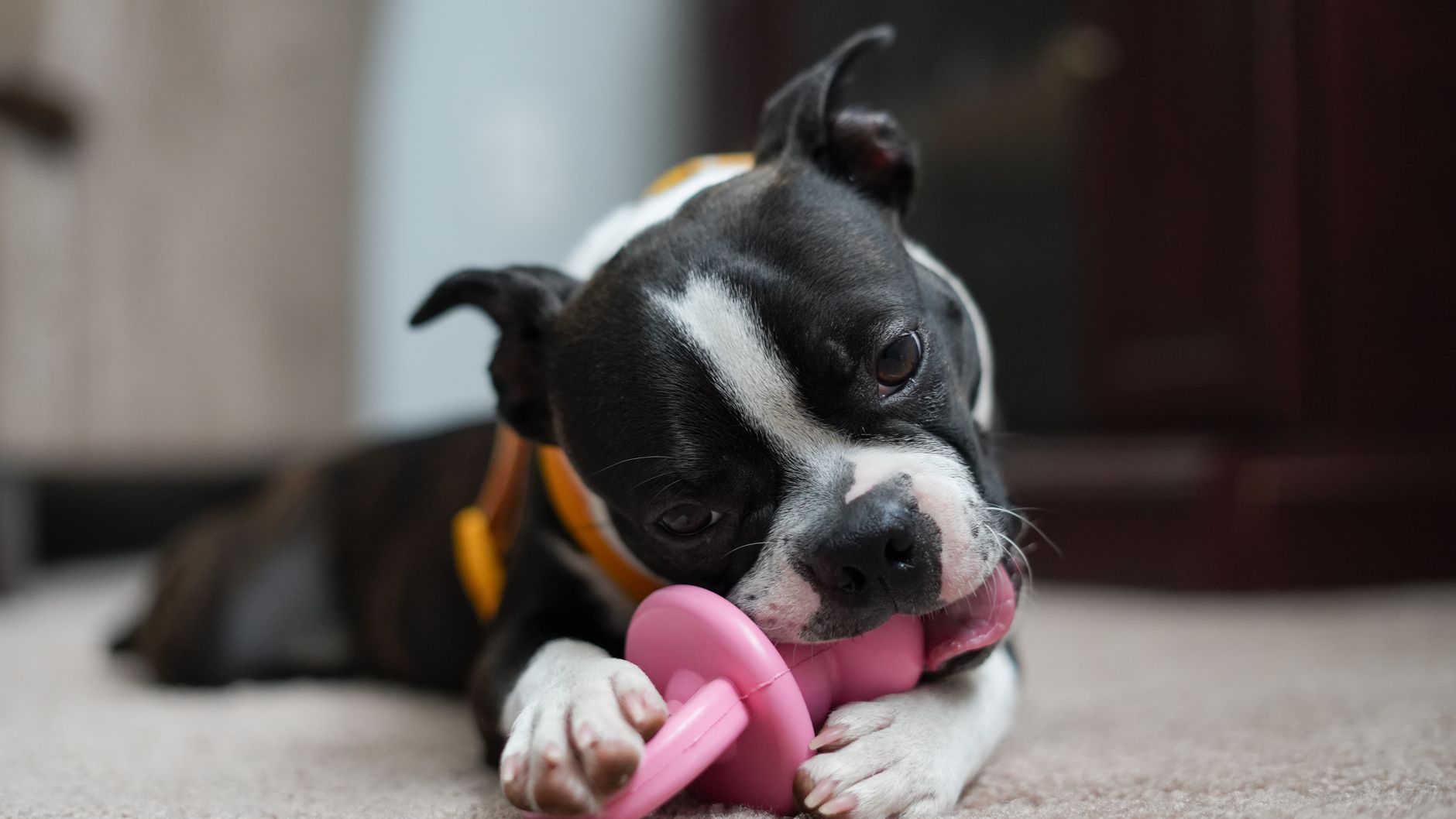
Step 4 — Reward. The instant your puppy takes the toy, praise them warmly and keep the game going with the toy. You are teaching them a simple rule: toys get the fun, hands end it.
Repeat this calmly every time, and be patient with yourself too. Puppies do not learn in a day, and consistency matters far more than perfection. If you want a refresher on why rewards beat corrections, read our guide to Positive Reinforcement.
Handling the Hard Moments
Some days the biting will feel relentless, and that is usually a sign your puppy needs something else. If the biting is hard or frantic, calmly end the game for about 30 seconds — step away, fold your arms, and give your puppy a moment to settle. Never hold your puppy’s mouth shut, pin them down, or yell at them. Those reactions scare a puppy and can make biting worse, not better. Watch for overtired signs, too: wild zoomies, an inability to settle, and harder biting than usual all mean it is nap time, not play time. Puppies need 18 to 20 hours of sleep a day, and a rested puppy bites far less. Keep a toy in your pocket or in every room, so a redirect is always within reach.

5 Mistakes That Make Biting Worse
- Playing tug-of-war with your bare hands, then wondering why hands are a target.
- Waving your hands around to pull them away, which turns your hand into a toy.
- Scolding or yelling, which adds excitement or fear to an already worked-up puppy.
- Letting one person play rough while another says no. Everyone in the family needs the same rules.
- Skipping naps and pushing through the evening crazies instead of enforcing rest.
For more on swapping a bad habit for a good one instead of just saying no, see our Training hub page.
When to Ask for Extra Help
Most puppy biting fades with age and steady redirecting, but get help sooner if the biting regularly breaks skin, if your puppy growls with a stiff body while biting, or if a puppy older than six months is still biting hard. A certified force-free trainer or your veterinarian can check whether pain, fear, or frustration is part of the picture.
Quick Answers
How long does puppy biting last? Most puppies improve a lot by five or six months, once teething is done and they have practiced gentler habits.
Should I yelp when my puppy bites? A short, calm “ouch” and then withdrawing your attention works for some puppies, but the withdrawal matters more than the sound.
Can I just give my puppy a chew every time? Yes — redirecting to a legal chew is the whole game. The more often the right choice pays off, the faster it becomes the habit.
Your Next Step
Start today with one change: keep a toy within reach and redirect every single bite. Your puppy is not giving you a hard time — they are having a hard time learning, and your calm consistency is what teaches them.
Grab our free First 30 Days Puppy Checklist here: https://rockynus.systeme.io/04b9540e
Find more printable training kits in our RockynusPrints shop on Etsy: https://rockynusprints.etsy.com
And if alone-time is the struggle, read “Calm When You’re Gone” by Rockynus on Amazon (paperback): https://www.amazon.com/dp/B0HR9W6L2S

